The Cult Question: How It Has Been Argued
"Is Human Design a cult?" is among the most frequently asked questions about the system. This page does not answer it. It documents how the question has been argued — the frameworks people apply, the cases critics and defenders make, and the primary-source facts each side draws on — and links the underlying record so readers can weigh it for themselves.
Consistent with this archive's standard, interpretation is attributed to whoever offers it; the archive itself takes no position on whether Human Design is or is not a cult. The frameworks below are general analytical tools, not verdicts.
What "cult" means — and the limits of the word
Before the frameworks, a caution the archive owes the reader: "cult" is a contested and pejorative term, and social scientists disagree about whether it can be applied rigorously to any group.
The "brainwashing" or "coercive persuasion" thesis that underlies much popular cult-labeling was examined and rejected by the American Psychological Association. A task force it convened — the Task Force on Deceptive and Indirect Methods of Persuasion and Control (DIMPAC), chaired by psychologist Margaret Singer — submitted its report in 1986. On 11 May 1987 the APA's Board of Social and Ethical Responsibility for Psychology declined to accept it, finding that "the report lacks the scientific rigor and evenhanded critical approach necessary for APA imprimatur."
Since then most sociologists of religion — among them Eileen Barker, J. Gordon Melton, and David Bromley — have treated "brainwashing" as unscientific and have preferred the neutral term new religious movement, reserving "high-control group" for cases where specific controlling behaviors are actually documented. This archive uses the frameworks below in that spirit: as analytical checklists that describe behaviors, not as a diagnosis and not as the pejorative label.
The definitional problem is itself a scholarly literature. James T. Richardson has traced how "cult" drifted from a neutral sociological term for a loosely organized new religion to an almost wholly negative popular label, so that calling a group a cult now asserts a verdict rather than a classification. Eileen Barker's study of the Unification Church found that members joined voluntarily and left in large numbers, undercutting the brainwashing premise the label often carries. Others look not at structure but at speech: Amanda Montell's account of "the language of fanaticism" argues that the linguistic markers people read as cultish — insider vocabulary, us-and-them framing, thought-terminating clichés — recur across a wide spectrum, from destructive groups to ordinary fitness brands and startups, which is exactly why surface language alone cannot settle the question.
Sources: APA Task Force on Deceptive and Indirect Methods of Persuasion and Control (DIMPAC), 1986, and the Board of Social and Ethical Responsibility for Psychology memorandum of 11 May 1987 (Wikipedia; cesnur.org); Eileen Barker, New Religious Movements: A Practical Introduction (1989); James T. Richardson, "Definitions of Cult: From Sociological-Technical to Popular-Negative," Review of Religious Research 34 (1993); Eileen Barker, The Making of a Moonie: Choice or Brainwashing? (1984); Amanda Montell, Cultish: The Language of Fanaticism (2021).
The frameworks people apply
Three social-science frameworks recur in discussions of high-control groups, and critics have applied each to the Human Design institution. They are analytical tools, and scholars disagree about how cleanly any of them maps onto a given group.
- Robert Jay Lifton — Eight Criteria of Thought Reform, from Thought Reform and the Psychology of Totalism (1961): milieu control, loaded language, demand for purity, and related markers.
- Steven Hassan — the BITE Model, from Combating Cult Mind Control: Behavior, Information, Thought, and Emotional control (freedomofmind.com).
- Janja Lalich — Bounded Choice, from Bounded Choice: True Believers and Charismatic Cults (2004): how a self-sealing belief system narrows a member's real options (janjalalich.com).
Lifton's eight criteria (1961), in full: (1) Milieu Control — control of communication and environment; (2) Mystical Manipulation — engineered experiences read as spontaneous or destined; (3) Demand for Purity — a black-and-white world of pure versus impure; (4) Cult of Confession — ritual disclosure of failings; (5) Sacred Science — the doctrine treated as beyond question; (6) Loaded Language — thought-terminating in-group vocabulary; (7) Doctrine Over Person — the teaching outranks personal experience; (8) Dispensing of Existence — the group decides who is legitimate and who is cast out.
Hassan's BITE model, in full, names four domains of undue influence: Behavior control (regulation of a member's actions, associations, time, and money); Information control (limiting access to outside sources and framing what counts as legitimate knowledge); Thought control (installing the group's vocabulary and doctrine as the filter for reality, with thought-terminating clichés); and Emotional control (working on fear, guilt, and belonging, and raising the felt cost of leaving). Lalich's bounded choice adds a further idea: in a fully self-sealing system a committed member can act with apparent free will while their real range of options has quietly narrowed to those the system allows.
Scholars stress that isolated matches prove little — the frameworks describe patterns across many features at once, and analysts differ sharply on how many markers, and how strongly expressed, a group must show before the label is warranted. That threshold question, not any single feature, is where the disagreement over Human Design actually sits.
The frameworks, applied — what each side points to
This table restates, in one place, facts already documented on this archive, sorted by the Lifton criterion critics most often attach to each. Every documented fact is sourced on the linked page; the "critics argue" and "the other view" columns are attributed characterizations, not the archive's findings.
| Lifton criterion | Documented fact (on this archive) | Critics argue… | The other view |
|---|---|---|---|
| Loaded Language | The proprietary vocabulary — Not-Self, deconditioning, the Four Types, Sacral / Splenic authority (/doctrines) | it reframes ordinary experience in thought-terminating in-group terms | it is ordinary technical vocabulary, like any specialized field |
| Sacred Science | The knowledge is presented as received in an eight-day transmission from a "Voice" in 1987 (/voice-on-ibiza) | a revealed, unquestionable origin insulates the doctrine from challenge | the mechanics are testable against one's own experiment; belief is not required |
| Dispensing of Existence | Ra Uru Hu's 25 July 2003 "Misrepresentation" letter and later directory removals (/record, /erasure) | the institution decides who is a legitimate teacher and casts out the rest | standards disputes occur in every field; removal is not shunning |
| Milieu Control / gating | A tiered, paid certification-and-licensing structure (/record, /the-credential) | successive paid trainings raise the cost of leaving and of dissent | training tiers and fees are standard in professional certification |
| Doctrine Over Person | Ra's deterministic "No Choice" material and the 2027 "global shift" cosmology (IHDS materials) | determinism and a dated prophecy discourage independent judgment | a cosmological era-cross is a teaching, not a coercive deadline |
| Mystical Manipulation | The multi-year "deconditioning" experiment lived through Strategy and Authority (/deconditioning) | a long, self-referential process keeps members inside the frame | a self-directed personal practice with no group enforcement |
Note: the archive draws no conclusion from this table; it is a reading aid. A criterion appearing here does not mean the archive judges it satisfied.
A technical typology — audience, client, or movement
One way sociologists cut through the loaded word is to ask not "cult or not" but "what kind of formation." Rodney Stark and William Sims Bainbridge distinguished three degrees of organization, using "cult" in a technical, non-pejorative sense: an audience cult, the loosest form, in which people consume a body of teachings through books, lectures, and media with little or no membership; a client cult, in which practitioners provide services to paying clients, as a therapist or reader would; and a cult movement, a full organization that seeks to meet its members' needs and asks for primary commitment.
Applied to Human Design — as a description, not a verdict — the system shows features of more than one type at once. Sold as mass-market books and free apps to a broad, dispersed readership, it resembles an audience cult: consumers of a teaching, with no membership required. Delivered through a network of certified analysts and consultants who read charts for paying clients, it shows the marks of a client cult: a practitioner-and-client service structure. Whether any part rises to a cult movement — an organization commanding primary allegiance — is precisely the contested point. The decentralization after 2011, with independent schools and unaffiliated teachers, cuts against a single controlling movement; critics locate movement-like features in the founder-era institution and the tiered certification ladder documented elsewhere on this archive. The typology does not resolve the question, but it shows why honest observers reach different answers: they are often describing different layers of the same thing.
Source: Rodney Stark and William Sims Bainbridge, The Future of Religion: Secularization, Revival, and Cult Formation (University of California Press, 1985); and "Of Churches, Sects, and Cults," Journal for the Scientific Study of Religion (1979). "Cult" is used here in its technical sociological sense.
The case critics make
Critics who apply these frameworks to the official Human Design apparatus point to several features. Each item below is the critics' characterization; the archive documents only the underlying facts where it can.
- Loaded language. Critics argue, following Lifton, that the system's proprietary vocabulary (Not-Self, deconditioning, the Four Types, Sacral and Splenic authority) reframes ordinary experience in in-group terms. The archive documents the vocabulary itself on /doctrines; the interpretation is the critics'.
- Financial and behavioral gating. Critics describe the tiered certification structure, in which advancement requires successive paid trainings, as raising the cost of leaving. This is the critics' characterization; the archive documents the certification and contract structure generally on /record.
- A revenue pyramid. Critics describe the same tiered certification-and-licensing structure as a pyramid in which money flows upward through the ranks. The system's co-founder, Chaitanyo Taschler, characterized it in those terms in his own newsletter: Ra, he wrote, "imagined a pyramid, with clients forming the base, feeding a layer of analysts, feeding a couple layers of teachers, feeding himself and his family," with "the base's plentiful money" percolating up to "make everybody wealthy." Chaitanyo recounts the sales pitch in the same newsletter: one of Ra's lines, he writes, was that "Human Design will be bigger than Microsoft." This is Chaitanyo's published characterization, not the archive's. The tiered pricing is documented in the institution's own materials. Because Jovian Archive is the single rights-holder that licenses every school in this realm — the IHDS, the BG5 Business Institute, and the licensed national organizations — the prices are set within one licensing structure rather than by competing schools. As of 2026, by the institute's own pricing, certifying as a BG5 Career and Business Consultant carries these documented costs: BG5BI License (one-time), $750; BG5 MMI software, $599 one-time or $199 per year, via Jovian Archive; Career Design Overview Toolkit, $650; Full Analysis Toolkit, $1,500; and the required two-semester Foundation Course at $825 each ($1,650) — a documented floor of roughly $5,150 before the three-semester Consultant Certification tuition itself, with the OC16 and Advanced certifications priced above that. (The required license, software, and toolkits alone come to about $3,500, before any tuition.) The earlier IHDS 2009/10 calendar listed the comparable certifications at $4,000 (Small Business Analysis) plus $3,000 (licensing) and $5,500 (Living Your Design Guide Teacher). The full itemized totals for every Jovian credential are set out on The Credential. Sources: BG5 Business Institute, bg5businessinstitute.com/education-curriculum (accessed 2026); Zen Human Design, Transmission 31.02, "The Business of Human Design," 21 April 2024 (humandesignsystem.com); and the IHDS 2009/10 Academic Year course calendar (Jovian Archive). The institute describes itself as "accredited"; that accreditation is by the International Accreditors for Continuing Education and Training (IACET), a continuing-education body that authorizes the awarding of CEUs — not the academic or regional accreditation of a degree-granting college, which in the United States carries separate obligations including publicly disclosed tuition (IACET, iacet.org).
- Institutional shunning. Critics cite Ra Uru Hu's July 25, 2003 "Misrepresentation" letter, which named Zeno Dickson, Chaitanyo Taschler, and Eleanor Haspel-Portner and set a deadline to disassociate from them, and the later removals from official directories, as instances of a shunning pattern. Primary sources: the letter and the directory captures (see /record and /erasure).
- A time-sensitive teaching. Critics point to Ra's teaching of a 2027 global shift as a deadline-driven dogma. This is the critics' characterization of Ra's published cosmology. The shift itself is described in the institution's own materials as the change of the Global Cycle from the Cross of Planning to the Cross of the Sleeping Phoenix in 2027 — a collective era-cross in Ra's cosmology, not any individual's chart (IHDS 2009/10 Course Calendar, Jovian Archive; "Rave Cosmology IV: 2027 Education").
- The "No Choice" premise. Critics argue the deterministic framing Ra expressed in his "No Choice" material can discourage dissent. The characterization is the critics'.
- An elect of "four percent." On camera, in his recorded foundational training, Ra Uru Hu framed the reach of the work as a saved minority: "I'm no Messiah… you can't save the world. There's no such thing as saving the world. The most you can save is four percent." Critics read the recurring four-percent figure — the small share said to live their design while the rest live as the "Not-Self" — as an elect-and-remnant framing that flatters insiders and writes off the other ninety-six percent, echoing Lifton's demand for purity and dispensing of existence. This is the critics' reading of Ra's recorded words. Source: Ra Uru Hu, recorded foundational training and late talks.
- A receptive milieu. Commentators note that the system's earliest adopters came disproportionately from the Osho (Rajneesh) sannyasin community — a milieu already practiced in devotion to a charismatic master, in taking a new name, and in reorganizing a life around a received teaching. Critics argue this primed the ground for the authority dynamics they describe; defenders counter that a shared spiritual background explains the system's rapid uptake, not its nature. The demographic link is documented in the sannyasin press (Osho News, "Vedant Zeno," 2020; "What is Human Design?," 2011) and in the biographies of early figures such as Chetan Parkyn, who lived with Osho before learning Human Design.
The fullest version of this case is The Human Design Cult (2025) by Jonah Dempcy — founder of the High Desert Human Design Conference and, by his own account, a nineteen-year participant in the system — which applies the Lifton and BITE frameworks at book length. The Mystical Heretic Substack essay "The Cult-Like Behavior in the Human Design Community" (2024) makes a related argument.
Key critical source. The Human Design Cult (2025) by Jonah Dempcy — a first-person account of his years in the Human Design community and his decision to leave, analyzed through the Lifton and BITE frameworks. Dempcy is the founder of the High Desert Human Design Conference and, by his own account, a nineteen-year participant in the system — not a certified teacher of it. It reached #1 in Amazon's Human Design category on release. View on Amazon
The case for the other view
Defenders and some independent observers argue Human Design does not meet a cult threshold:
- No central authority after 2011. Since Ra Uru Hu's death, no single structure commands the field; numerous independent schools and unaffiliated teachers operate freely, which several observers argue distinguishes it from classic high-control groups. The archive documents this decentralization (see /doctrines and /national-directors).
- An ownership claim that failed in court. In 2020 the Tribunale di Firenze found that no one can own the Human Design System as a set of ideas, and independent teaching has proliferated, which defenders read as evidence against tight institutional control. Primary source: the ruling (see /record).
- The institution's response to the ruling. Jovian Archive has publicly contested the reading that the Florence decision placed Human Design in the public domain. In a statement signed by its directors, Jacqueline Riley and Loki S. Krakower Riley, the company argued that the ruling bound only the parties to that Italian proceeding and did not extinguish Ra Uru Hu's copyrights, and maintained that Ra's specific graphic works, the Rave BodyGraph and the Rave I'Ching among them, remain protected, so that reproducing them is infringement. The statement defended the IHDS and its licensed national organizations as the standard-bearers for accurate transmission of the system. This is the institution's own position, included here as a counter to the readings above; on the narrow legal point, that a first-instance Italian ruling binds the parties before it, it is consistent with how this archive frames the Florence decision (see /record). Source: Jovian Archive, public Facebook statement (facebook.com/JovianArchive).
- A tool, not a creed. Practitioners in the Zen Human Design lineage argue the original mechanics are an instrument for awareness, separable from the institutional behavior critics object to (see /deconditioning).
- Exit is public and common. Prominent figures have left the official structure openly and kept working — Richard Rudd (Gene Keys), Chetan Parkyn, and Karen Curry Parker among them — without reprisal beyond loss of official standing. Defenders argue visible, consequence-free exit is inconsistent with a high-control group (see /the-credential and /divergence).
- The knowledge is freely published. The core system is available in mass-market books from mainstream publishers and in free apps; defenders argue a body of knowledge anyone can buy and read is not a closed, information-controlled milieu (see /books and /divergence).
- An explicit disclaimer of messiah status. The same recorded "four percent" talks are read the other way by defenders. In them Ra Uru Hu refuses the guru role outright — "I'm no Messiah… you can't save the world" — and, elsewhere, "I got a big fat ego, if you don't like it take a hike." Defenders argue a founder who disclaims salvation, warns followers off making him an authority, and tells them to test the system against their own experiment is the opposite of the grandiose leader the cult frame requires. Source: Ra Uru Hu, recorded foundational training and late talks.
The BITE model, applied — what fits and what does not
Because critics most often reach for Hassan's BITE model, it is worth walking its four domains across the documented record — noting, for each, what a critic points to and what cuts the other way. The archive scores none of these; it lays them side by side.
- Behavior. Points toward: a tiered certification-and-licensing ladder with fees and exclusivity terms, documented in the institution's own catalog (/the-credential). Cuts against: no communal living, no dictated daily conduct, no control of members' associations or private lives — participation is remote and part-time.
- Information. Points toward: a revealed-origin doctrine and an official standard for "accurate" transmission maintained by licensed bodies. Cuts against: the core knowledge is openly published in mass-market books and free apps, and rival and dissenting versions circulate freely (/books, /divergence).
- Thought. Points toward: a distinctive in-group vocabulary and a deterministic frame that critics say filters ordinary experience (/doctrines). Cuts against: practitioners are told to test the system against their own experiment rather than accept it on faith, and open disagreement about method is common and public.
- Emotional. Points toward: the "Not-Self" framing, which critics argue can attach guilt to living outside the system's terms, and the 2003 letter and later removals as signals of what dissent costs (/record, /erasure). Cuts against: prominent figures have left openly and kept working with no consequence beyond loss of official standing (/divergence).
Note: the "points toward / cuts against" pairs are attributed positions, not the archive's findings. Model source: Steven Hassan, Combating Cult Mind Control (1988), and the BITE Model of Authoritarian Control (freedomofmind.com).
The frameworks after the lockdowns — influence without a compound
A limitation runs through all three frameworks: they were built on the bounded, physically co-present group. Lifton studied prisons and thought-reform camps; Singer and the early exit-counselors studied residential communities; the classic markers — milieu control, isolation, the cost of walking out a gate — assume a place the member is inside of. Human Design has never had that place, which is much of the defense above. But the assumption itself has aged.
After 2020, as social distancing pushed spiritual and self-development communities online, scholars of coercive influence began asking whether the frameworks need revising for a world where the "milieu" is a feed, a private group, and a screen. Amanda Montell argues the linguistic and social markers once confined to compounds now travel through influencers, online courses, and comment sections; Steven Hassan has applied the BITE model to diffuse, media-mediated followings with no central address; Alexandra Stein's work on attachment describes how the bond that holds a member can be manufactured at a distance, through repeated parasocial contact, without anyone ever meeting in person.
For a system delivered as recorded video, apps, and online cohorts, this cuts both ways — and neither way is the archive's verdict. On one hand it weakens the simplest defense: a person can now be immersed in an all–Human Design information environment — recorded trainings, algorithm-fed groups, a parasocial bond to a founder on screen — without ever leaving home, so "there is no compound" no longer settles the milieu-control question the way it once did. On the other, the same medium makes the classic controls harder to sustain: exit is frictionless (close the tab, unfollow), rival and dissenting views are one search away, and a decentralized online field has no gatekeeper who can enforce isolation or dispense membership. The scholarship here is unsettled and actively debated; the frameworks are being revised for the online era, not retired.
Sources: Amanda Montell, Cultish: The Language of Fanaticism (2021); Steven Hassan, The Cult of Trump (2019) and the online-influence updates to the BITE model (freedomofmind.com); Alexandra Stein, Terror, Love and Brainwashing: Attachment in Cults and Totalitarian Systems (2017).
A noted irony, within the system's own symbolism
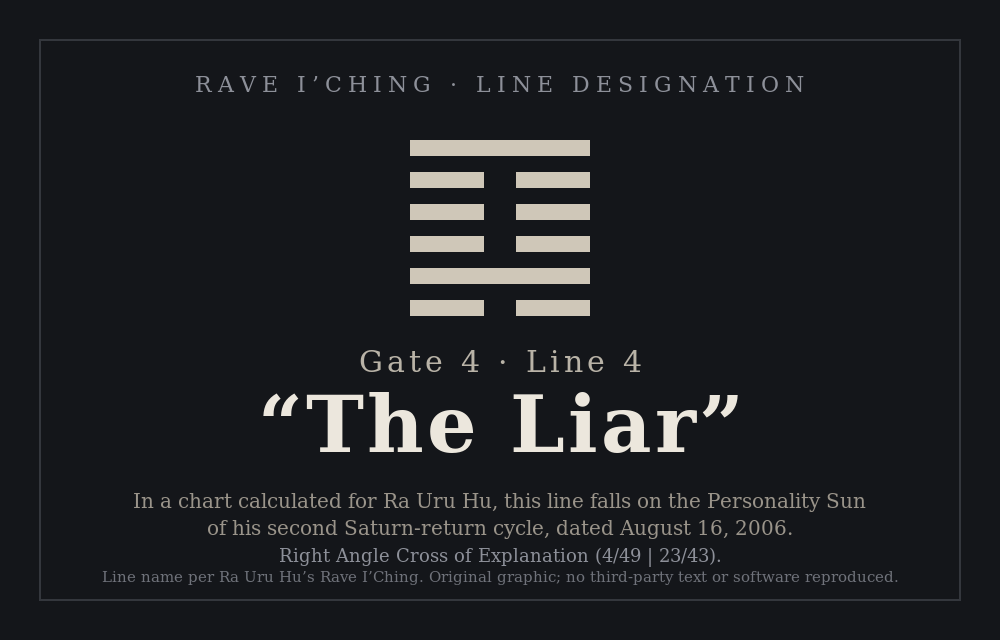
Because the question of Ra Uru Hu's candor is itself contested in the attributed accounts above, one coincidence within the system's own materials is sometimes raised. In Ra's own Rave I'Ching, Gate 4, Line 4 carries the name "the Liar." In a chart calculated for Ra, that line falls on the Personality Sun of his second Saturn-return cycle, dated August 16, 2006.
The archive records this only as an irony within the system's own symbolism. It is not offered as evidence of anything. A line designation does not establish a person's character, and the archive draws no conclusion from it.
Why the question keeps arising
Independent of any verdict, several features of Human Design predictably prompt the cult question, and naming them plainly is more useful than avoiding them: a single charismatic founder; knowledge presented as revealed in an eight-day mystical encounter rather than derived; a distinctive in-group vocabulary; a multi-year personal process ("deconditioning") with its own stages; and a deterministic framing of choice. Each is documented from the system's own materials elsewhere on this archive. None is unique to cults — they are also common to religions, professions, and schools of thought — which is why the frameworks above, not the surface features, are what the argument turns on.
What would have to be true
A reader can test the two readings directly by asking what each would require. For the high-control reading to hold, one would expect undue influence beyond loss of official standing: exit that is materially or socially penalized, information kept from members, and a present-day authority able to compel allegiance. For the contrary reading to hold, one would expect exit to be free and common, the knowledge to be openly available, fees to resemble ordinary professional certification, and no central body able to command commitment.
Much of what each test calls for is already documented on this archive — the certification and contract structure, the 2003 letter and directory removals, the decentralization after 2011, the open publication of the knowledge, the visible departures of senior figures. What the record does not do is settle the weighing. The same facts support different conclusions depending on the threshold an observer brings, which is why the question persists among informed people rather than resolving. The archive supplies the facts and the tests; it does not perform the weighing.
What people are saying
Independent of the frameworks above, the question is asked openly and repeatedly in public — in cult-recovery communities that take the word seriously, and, more tellingly, by believers asking it from inside the Human Design community itself. The threads below are gathered as documented sentiment: evidence that these concerns are widely and independently voiced, not as proof of any claim about a specific person or company. Individual commenters are not named. What is notable is the convergence — strangers with nothing in common describing the same pattern, one that is narrower than either side usually frames it: the recurring worry is less about the chart itself than about the coercive use of the system's language to shame, silence, or control.
The question, asked openly
- Human Design — r/cultsurvivors
- Have you heard of a cult called Human Design? — r/cults
- Anyone familiar with Human Design? — r/cults
- HD is a soft cult — r/humandesign
- Is Human Design a cult and dogmatic? — r/humandesign
- Quitting is initiating (Jonah Dempcy) — r/humandesign
The science
- I calculated my chart on another site and got a different result — r/humandesign
- Major flaw in the basis for Human Design theory — r/humandesign
- How seriously do you take Human Design? — r/humandesign
- Anyone here heard of Human Design? — r/lastpodcastontheleft
The money
- Everything Human Design is trapped behind a paywall — r/humandesign
- Why isn't Human Design accessible for everyone? — r/humandesign
The prophecy
- Let's talk about 2027 — r/humandesign
- What will 2027 and beyond look like practically? — r/humandesign
The mainstream moment
- Is Human Design a cult, or what is going on? — r/LoveIsBlindOnNetflix
- Patrick is in a cult — r/LoveIsBlindOnNetflix
Note: the linked discussions are public and are shared as documented sentiment — evidence that the concern is widely and independently voiced — not as proof of any claim about a specific person or company. Individual commenters are not named. If the language has started to feel less like a map and more like a cage, the companion page, Deconditioning, is about getting free.
What the documented record shows
This archive does not classify Human Design as a cult or not a cult. It documents the facts each side draws on — the 2003 letter, the certification and contract structure, the trademark record, the Florence ruling, the directory removals — on the pages linked above, with primary sources. Readers can apply the frameworks themselves and reach their own conclusion.
Scope note: this page deliberately avoids comparisons to specific other organizations (for example, named groups with criminal convictions). Such comparisons are inflammatory, legally hazardous, and inconsistent with the archive's documentary standard.
Sources / further reading: Lifton, Thought Reform and the Psychology of Totalism (1961); Hassan, Combating Cult Mind Control; Lalich, Bounded Choice (2004); Jonah Dempcy, The Human Design Cult (2025); "The Cult-Like Behavior in the Human Design Community," Mystical Heretic (2024); Osho News, "Vedant Zeno" (2020); the APA DIMPAC report (1986) and BSERP rejection (1987); Eileen Barker, New Religious Movements: A Practical Introduction (1989) and The Making of a Moonie: Choice or Brainwashing? (1984); Rodney Stark and William Sims Bainbridge, The Future of Religion (1985); James T. Richardson, "Definitions of Cult," Review of Religious Research 34 (1993); Amanda Montell, Cultish: The Language of Fanaticism (2021); the research collections of the International Cultic Studies Association (icsahome.com); and this archive's /record, /erasure, and /doctrines.
Where the cult question sits in the wider criticism
"Is Human Design a cult?" is one strand of a broader, documented critique, not the whole of it. The same system draws separate lines of argument about its scientific validity — whether its claims can be tested and whether they hold up; about ownership — who, if anyone, can control a body of ideas, the question the Florence ruling turned on; and about mechanism — how the BodyGraph is derived and whether that derivation is sound. Each is a distinct question with its own record, and none of them is settled by an answer to the cult question, or settles it.
Readers weighing the material on this page will often want the rest of that picture. This archive keeps a neutral hub that gathers the strands together and links the underlying pages for each.
- Human Design criticism — the broader hub: the full range of documented critique and debunking, of which the cult question is one part.
- Is Human Design real? — how the reality and evidence question has been argued.
- How accurate is Human Design? — what accuracy claims are made and how they have been tested.
Note: as elsewhere on this archive, these pages document how each question has been argued and link the primary record; they render no verdict.
The books behind these frameworks
This page engages one book-length argument directly — Jonah Dempcy's — and applies the established cult-analysis frameworks below. They are listed here as sources and further reading: general works on influence and new religious movements, not Human Design titles. Fuller catalog entries are on the books page.
-
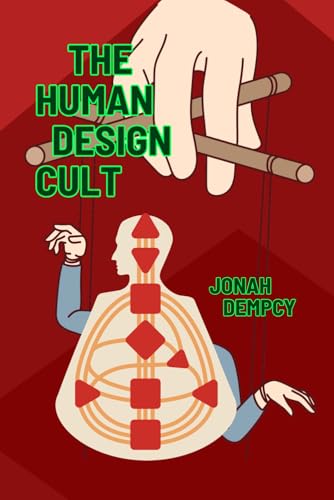 The Human Design Cult A first-person account of nineteen years in the system and the decision to leave it, read through the Lifton and BITE cult-analysis frameworks. Reached #1 in Amazon's Human Design category on release.
The cult-analysis frameworks
-
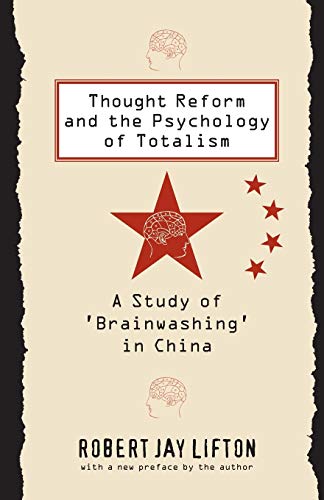 Thought Reform and the Psychology of Totalism The source of the eight criteria of thought reform applied on this page.
 -
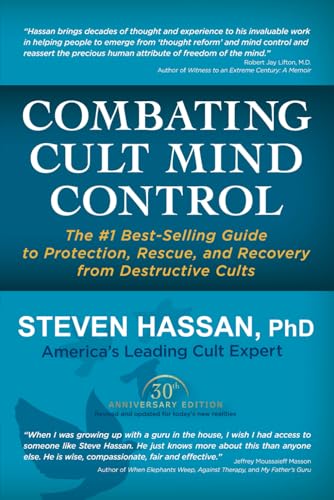 Combating Cult Mind Control Introduces the BITE model — Behavior, Information, Thought, Emotion.
 -
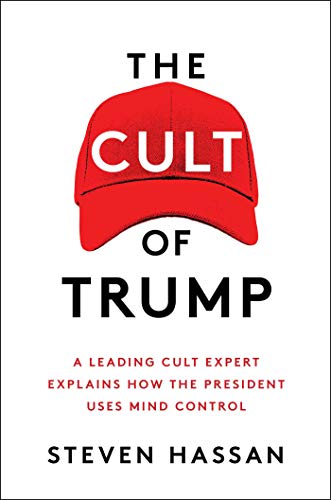 The Cult of Trump Applies the BITE model to a diffuse, media-mediated following.
 -
 Bounded Choice How a self-sealing belief system narrows a member's real options.
 -
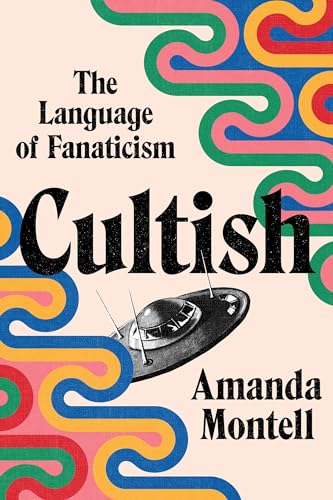 Cultish: The Language of Fanaticism How "cultish" language recurs from destructive groups to ordinary brands.
 -
 Terror, Love and Brainwashing How the bond that holds a member can be manufactured at a distance.
 - The Making of a Moonie Found members joined voluntarily and left in large numbers — undercutting the brainwashing premise.
-
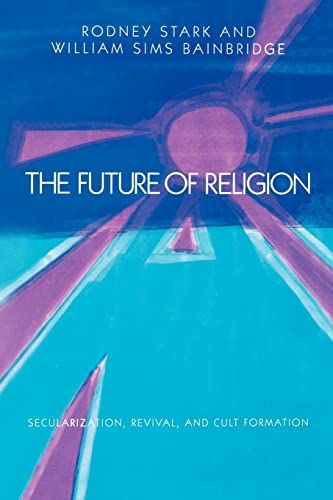 The Future of Religion Source of the audience / client / movement typology.
Note: the frameworks above are general scholarship listed as sources and further reading; their inclusion is not a claim that Human Design is a cult. The archive renders no verdict.